Lumber Sizes: Nominal vs Actual
Complete reference guide for standard lumber dimensions
Understanding Nominal vs Actual Sizes
When you buy lumber at a store, the size on the label (like "2×4") is called the nominal size. However, the actual dimensions you'll measure are smaller. This isn't a mistake—it's an industry standard.
Nominal Size = The size before drying and planing (what's on the label)
Actual Size = The finished dimensions after processing (what you measure)
Why Are They Different?
When lumber is freshly cut, it truly matches the nominal dimensions. However, it goes through two processes that reduce its size:
- 1. Drying: Green (wet) lumber is dried in a kiln to reduce moisture content from 30%+ down to 15-19%, causing the wood to shrink
- 2. Planing: The dried lumber is planed (smoothed) on all four sides, removing additional material to create uniform, smooth surfaces
The result: A 2×4 starts at 2" × 4", but after drying and planing, it measures 1.5" × 3.5".
Standard Lumber Sizes Chart
This chart applies to: Softwood dimensional lumber (Pine, Spruce, Fir, Cedar, Hemlock) and Pressure-treated lumber (PT lumber for outdoor use).
This chart does NOT apply to: Hardwood lumber (uses a different sizing system), Plywood or OSB sheets (no nominal vs actual difference), or Engineered lumber (LVL, I-joists, Glulam).
Want to understand why? See detailed wood types explanation below ↓
1× Boards (Actual thickness: 0.75")
| Nominal Size | Actual Size | Common Uses |
|---|---|---|
| 1×2 | 0.75" × 1.5" | Trim, lattice, small crafts |
| 1×3 | 0.75" × 2.5" | Trim, shelving, small projects |
| 1×4 | 0.75" × 3.5" | Trim, paneling, shelves, furniture |
| 1×6 | 0.75" × 5.5" | Shelving, paneling, fencing |
| 1×8 | 0.75" × 7.25" | Shelving, tabletops, wide trim |
| 1×10 | 0.75" × 9.25" | Wide shelving, stair treads |
| 1×12 | 0.75" × 11.25" | Wide boards, shelving, tabletops |
2× Dimensional Lumber (Actual thickness: 1.5")
| Nominal Size | Actual Size | Common Uses |
|---|---|---|
| 2×2 | 1.5" × 1.5" | Light framing, supports, stakes |
| 2×3 | 1.5" × 2.5" | Light framing, blocking |
| 2×4 | 1.5" × 3.5" | Framing, studs, general construction |
| 2×6 | 1.5" × 5.5" | Floor joists, decking, rafters |
| 2×8 | 1.5" × 7.25" | Floor joists, beams, headers |
| 2×10 | 1.5" × 9.25" | Floor joists, beams, long spans |
| 2×12 | 1.5" × 11.25" | Heavy joists, beams, stair stringers |
Larger Timbers & Posts
| Nominal Size | Actual Size | Common Uses |
|---|---|---|
| 4×4 | 3.5" × 3.5" | Posts, structural supports, deck posts |
| 4×6 | 3.5" × 5.5" | Beams, heavy posts |
| 6×6 | 5.5" × 5.5" | Large posts, beams, landscape timbers |
Important Things to Remember
💰 When Calculating Board Feet
Always use the nominal size (not actual size) when calculating board feet for pricing:
- ✓ Use 2×4 (nominal) for calculations
- ✗ Don't use 1.5×3.5 (actual) for calculations
This is the industry standard. Lumber yards price by nominal dimensions.
📐 When Designing Projects
Use the actual size when planning cuts and dimensions:
- ✓ Measure and plan with actual dimensions (1.5"×3.5")
- ✓ Account for the real size in your designs
- ✓ Check measurements with a tape measure before cutting
🛒 Shopping Tip
When buying lumber, ask for the nominal size ("I need five 2×4s, 8 feet long"). Store employees understand this standard terminology. The actual size is implied and universal.
📏 Extra Buying Tip
We recommend buying 5-10% extra lumber to account for:
- • Wood defects (knots, cracks, warping)
- • Cutting mistakes
- • Design adjustments
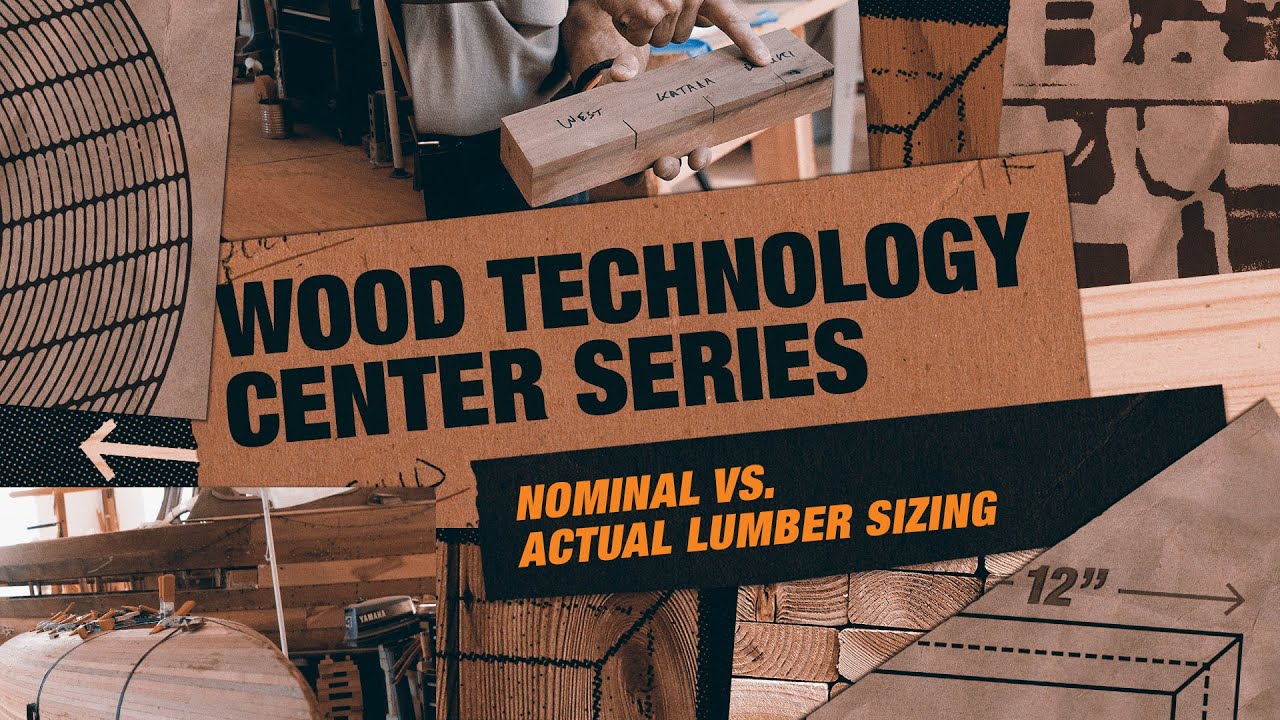
Watch: Nominal vs Actual Lumber Sizes Explained
This video provides a visual explanation of why lumber nominal sizes differ from actual sizes:
🌲 Wood Types Explained
Different types of lumber use different sizing systems. Understanding which type you're working with is crucial for accurate measurements and purchasing decisions.
Softwood Dimensional Lumber 📋 Covered in our chart above
What is it?
Construction-grade lumber from coniferous trees including Pine, Spruce, Fir (SPF), Hemlock, and Cedar.
Why does nominal vs actual apply?
- • Lumber is milled when green (wet) with high moisture content
- • Kiln-dried to reduce moisture from 30%+ down to 15-19%
- • Wood shrinks during drying process
- • Planed (surfaced) smooth on all four sides, removing more material
- • Result: A 2×4 becomes 1.5"×3.5" after processing
Common uses
House framing, wall studs, floor joists, roof rafters, decks, fences, DIY furniture, and general construction projects.
Pressure-Treated Lumber (PT) 📋 Covered in our chart above
What is it?
Softwood (typically pine or spruce) that has been chemically treated under pressure to resist rot, decay, and insect damage. Recognizable by its green or brown tint.
Does nominal vs actual apply?
Yes! Pressure-treated lumber follows the exact same sizing standards as regular softwood lumber.
- • A PT 2×4 is also 1.5"×3.5" actual
- • A PT 2×6 is also 1.5"×5.5" actual
- • Same nominal vs actual relationship as untreated lumber
Common uses
Deck framing and posts, fence posts, ground-contact applications, outdoor structures, and any project exposed to moisture or soil.
Special notes
PT lumber may be slightly wet when purchased and can warp as it dries. Allow it to acclimate before installation when possible.
Hardwood Lumber ℹ️ Uses a different sizing system
What is it?
Lumber from deciduous (broad-leaf) trees such as Oak, Walnut, Maple, Cherry, Mahogany, and Ash. Used primarily for fine furniture, cabinetry, and high-end woodworking projects.
Why doesn't our chart apply?
Hardwood uses the "Quarter System" instead of the 2×4, 2×6 naming convention:
- • 4/4 (four-quarter) = 1" nominal → approximately 0.75" actual
- • 5/4 (five-quarter) = 1.25" nominal → approximately 1" actual
- • 6/4 (six-quarter) = 1.5" nominal → approximately 1.25" actual
- • 8/4 (eight-quarter) = 2" nominal → approximately 1.75" actual
Additionally, hardwood width and length are NOT standardized like softwood:
- • Sold in random widths (typically 4" to 12"+)
- • Cut to various lengths from large boards
- • You select boards based on the actual piece, not a standard size like "2×4"
Why can't hardwood be standardized?
- • Tree characteristics: Hardwood trees grow slowly with irregular, curved trunks and branches, making each board unique
- • High value: Hardwood is expensive ($6-18+ per board foot), so mills maximize yield by cutting boards to follow the natural shape rather than forcing standard sizes
- • Usage patterns: Woodworkers select hardwood for appearance (grain, color) and customize cuts for each project, not for standardized construction
Common uses
Fine furniture making, custom cabinetry, hardwood flooring, decorative trim, cutting boards, and high-quality woodworking projects where appearance and durability matter.
Plywood & Sheet Goods ℹ️ No nominal/actual difference
What is it?
Engineered wood panels including Plywood (thin wood veneers glued together), OSB (Oriented Strand Board), and MDF (Medium Density Fiberboard).
Why doesn't nominal vs actual apply?
Sheet goods are manufactured products with precise thickness control:
- • Standard sheet size: 4' × 8' (actual dimensions)
- • Common thicknesses: 1/4", 1/2", 5/8", 3/4"
- • No nominal vs actual difference
- • The labeled thickness is the actual thickness
- • Example: 3/4" plywood is actually 3/4" thick
Common uses
Wall and roof sheathing, subfloors, cabinet boxes, shelving, project panels, furniture backs, and general construction applications where large flat panels are needed.
Engineered Lumber ℹ️ Uses actual dimensions as labeled
What is it?
Manufactured structural products including LVL (Laminated Veneer Lumber), I-Joists, Glulam (Glue-laminated beams), and other engineered wood products designed for specific structural applications.
Why doesn't nominal vs actual apply?
Engineered lumber uses precise manufacturing specifications:
- • Labeled dimensions are actual dimensions
- • Example: A 1.75" × 14" I-joist is exactly 1.75" × 14"
- • No shrinkage or planing adjustments needed
- • Manufactured to exact specifications for structural performance
Common uses
Long-span floor joists, roof beams, headers over large openings, engineered floor systems, and commercial construction where high strength and dimensional stability are required.
Summary: Our nominal vs actual size chart is designed for softwood dimensional lumber and pressure-treated lumber—the types of wood most DIYers and contractors use for construction, decking, fencing, and general projects. If you're working with hardwood, plywood, or engineered lumber, you'll need to understand their specific sizing systems.
Ready to Calculate Your Lumber Costs?
Now that you understand lumber sizes, use our Board Foot Calculator to estimate how much your project will cost. Simply enter the nominal size, length, and quantity.
Want to learn more about board feet? Read our guide: What is a Board Foot?